

 Peptides
 Aminos
 Capsules
 Supplies
 Specialty

GHK-Cu (Copper Peptide)
Price range: $25.00 through $35.00
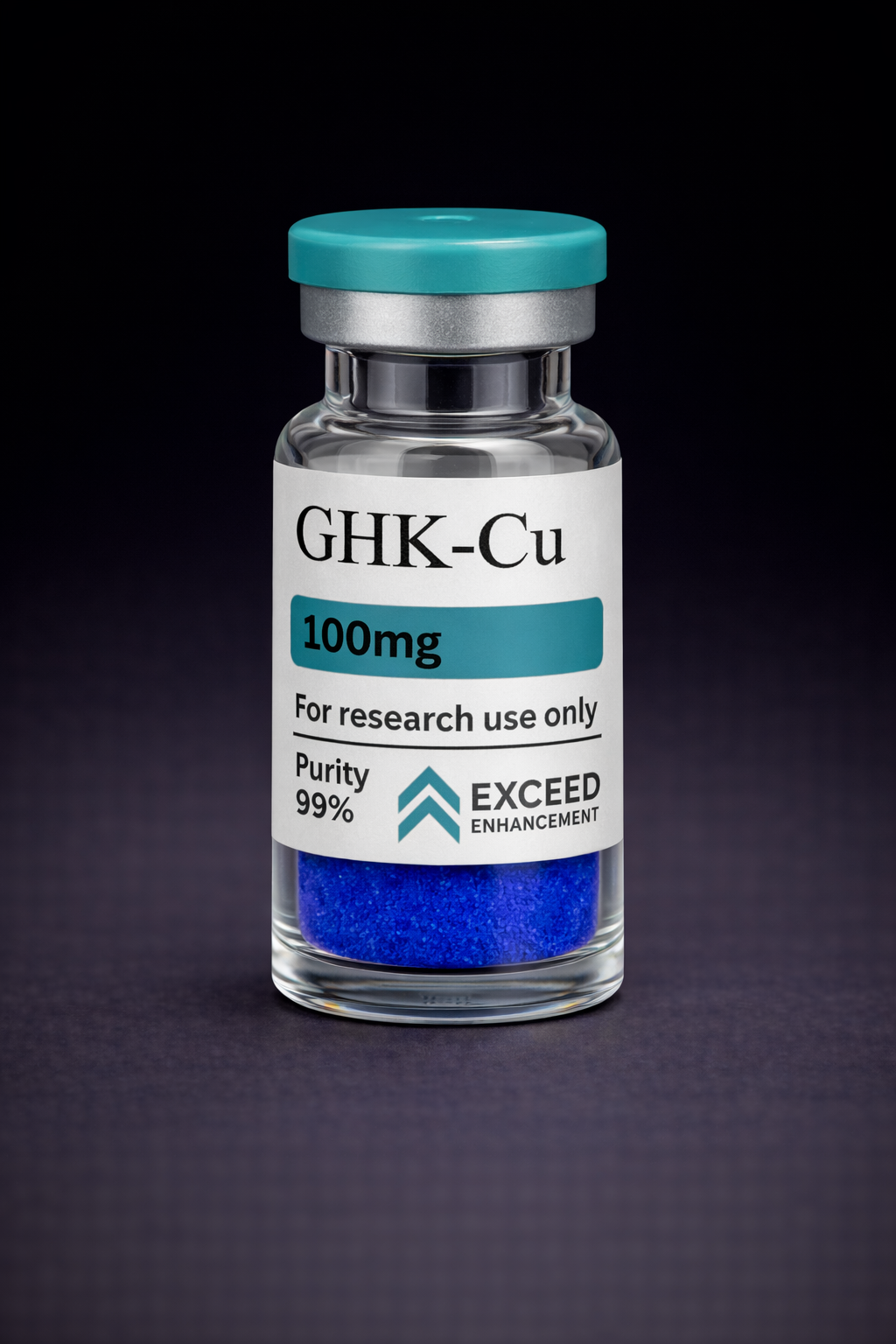
Research-grade GHK-Cu (Glycine-Histidine-Lysine Copper Peptide) — lyophilized, >98% purity (HPLC verified). Available in 50mg and 100mg vials. Studied for wound healing, tissue repair, collagen synthesis, and anti-fibrotic activity.
Learn more: Research Guide →
For research use only.
GHK-Cu (copper peptide GHK) is a naturally occurring tripeptide consisting of glycine, histidine, and lysine complexed with copper (Cu2+). First identified in human plasma in the early 1970s, GHK-Cu has since become one of the most extensively studied peptides in the fields of wound healing, tissue repair, anti-fibrotic activity, and skin regeneration research.
Research Background
GHK-Cu is found naturally in plasma, saliva, and urine, and circulates at concentrations that decline significantly with age. Research suggests that serum GHK-Cu levels drop from approximately 200 ng/mL in youth to under 80 ng/mL by age 60, a decline associated with reduced regenerative capacity, increased inflammation, and impaired wound healing in preclinical models.
Areas of Active Research
- Wound Healing & Tissue Repair: Multiple preclinical studies demonstrate that GHK-Cu accelerates wound closure, promotes collagen and glycosaminoglycan synthesis, and stimulates the proliferation of dermal fibroblasts. It has been investigated for use in burn injury models, surgical wound contexts, and dermal ulcers.
- Anti-Fibrotic Activity: GHK-Cu has shown the ability to modulate TGF-beta1 signaling and inhibit the over-production of fibrotic collagen, positioning it as a potential anti-fibrotic agent in organ and tissue research.
- Anti-Inflammatory Effects: Research indicates GHK-Cu can suppress inflammatory cytokines including TNF-alpha and IL-6 while promoting the expression of anti-inflammatory pathways, suggesting utility in inflammation-driven tissue damage models.
- Angiogenesis: GHK-Cu promotes vascular endothelial growth factor (VEGF) expression in preclinical studies, supporting new blood vessel formation—an important factor in tissue healing and regeneration.
- Neuroprotective Research: Emerging research has explored GHK-Cu’s role in nerve regeneration and its potential to modulate gene expression patterns associated with cognitive aging and neurological decline.
- Antioxidant Properties: GHK-Cu acts as a superoxide dismutase (SOD) mimetic and has been studied for its ability to reduce oxidative stress in various tissue models.
Mechanism of Action
GHK-Cu exerts its biological effects through multiple mechanisms. It acts as a chemoattractant for mast cells and macrophages, stimulates the synthesis of extracellular matrix proteins (collagen types I, III, and IV, fibronectin, laminin), modulates metalloproteinase (MMP) activity to promote tissue remodeling, and activates multiple gene pathways involved in repair and regeneration. Studies suggest GHK-Cu influences the expression of over 4,000 genes, including pathways governing inflammation, DNA repair, and cell survival.
Purity & Quality
Our GHK-Cu is manufactured to research-grade standards with >98% purity verified by HPLC analysis. Each vial contains lyophilized peptide suitable for laboratory reconstitution and in vitro or in vivo research applications.
Read the full GHK-Cu Research Guide →
For research use only. Not for human consumption. Not intended to diagnose, treat, cure, or prevent any disease.
| Dose |
50mg ,100mg |
|---|
Reviews
There are no reviews yet.